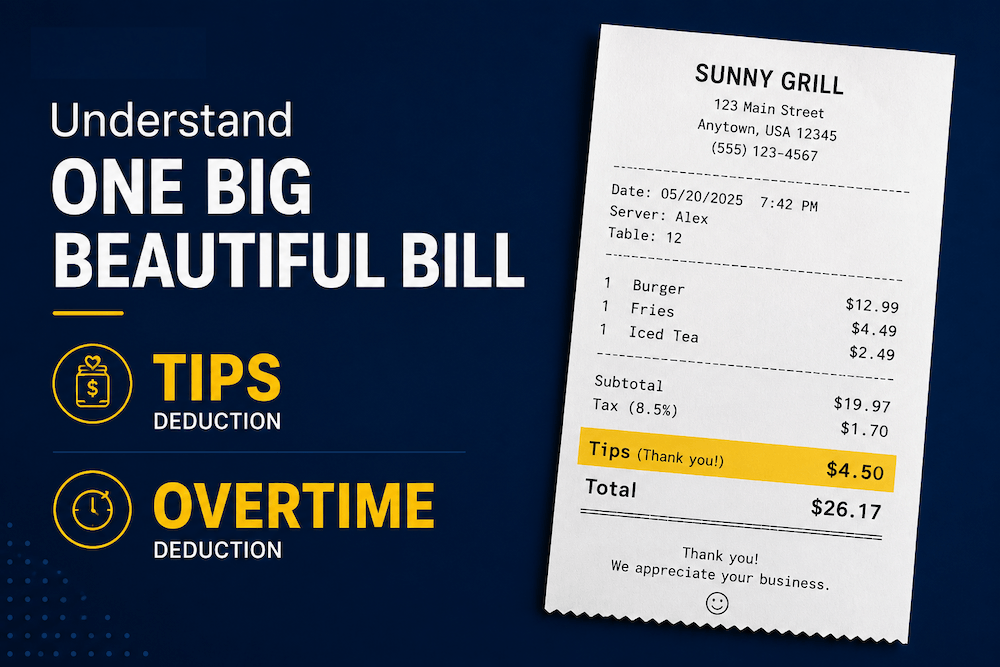
If you earn overtime pay or receive tips, a new federal tax deduction may apply to you.
But there is one catch.
You still need records.
Income records, pay records, and receipts can all play an important role when preparing for tax season.
The One Big Beautiful Bill introduced two new federal tax deductions:
1. Qualified overtime pay
2. Qualified tips
Why Records Matter
A deduction only helps if you can support it.
Whether the deduction involves overtime pay, tips, or business expenses, documentation is often the foundation of tax reporting.
That usually means:
* income records
* pay records
* receipts
The new deductions do not eliminate reporting requirements. Instead, they may make accurate recordkeeping even more important.
No Tax on Overtime
Qualified overtime compensation may be deductible.
Workers who regularly earn overtime pay may benefit, including:
* environmental consultants
* construction workers
* field technicians
* emergency response teams
* other employees eligible for overtime compensation
For time-and-a-half overtime, the deduction generally applies to the additional half portion of overtime compensation, not the entire overtime payment.
The maximum deduction is $12,500 per year, or $25,000 for joint filers.
The deduction phases out when modified adjusted gross income exceeds $150,000, or $300,000 for joint filers.
Example
An environmental consultant is called to an emergency site assessment after a chemical spill.
The project requires several late nights and weekend hours beyond their normal schedule.
To support tax reporting, they should keep:
* pay records showing overtime compensation
* timesheets or project logs documenting additional hours worked
* receipts for mileage, lodging, meals, field supplies, or other project-related expenses
Whether overtime qualifies depends on the worker's circumstances, how the overtime was calculated, and how it was reported.
Learn more from the IRS - “One, Big, Beautiful Bill Act: Tax deductions for working Americans and seniors” [] and IRS Notice 2025-69 []
No Tax on Tips
Qualified tips may be deductible if they are:
* voluntary tips from customers
* cash tips or charged tips
* received in a job that normally receives tips
* reported on a W-2, 1099, other statement, or Form 4137
Workers who commonly receive tips may benefit, including:
* restaurant workers
* roof renovators and contractors
* personal service providers
* gig workers
* other occupations that customarily receive tips
The maximum deduction is $25,000 per year.
The deduction phases out when modified adjusted gross income exceeds $150,000, or $300,000 for joint filers.
For self-employed workers, the deduction cannot exceed the net income from the business where the tips were earned.
Example
A roof renovator completes an emergency repair after a storm.
The customer is grateful and leaves a voluntary tip.
To support tax reporting, they should keep:
* payment records showing the job income
* records showing the tip amount
* receipts for materials, fuel, parking, mileage, or other job-related expenses
Whether a tip qualifies depends on the occupation, how the tip was paid, and how it was reported.
Learn more from the IRS - “One, Big, Beautiful Bill Act: Tax deductions for working Americans and seniors” [], IRS Notice 2025-69 [], and Form 4137 []
How Receipt AI Can Help
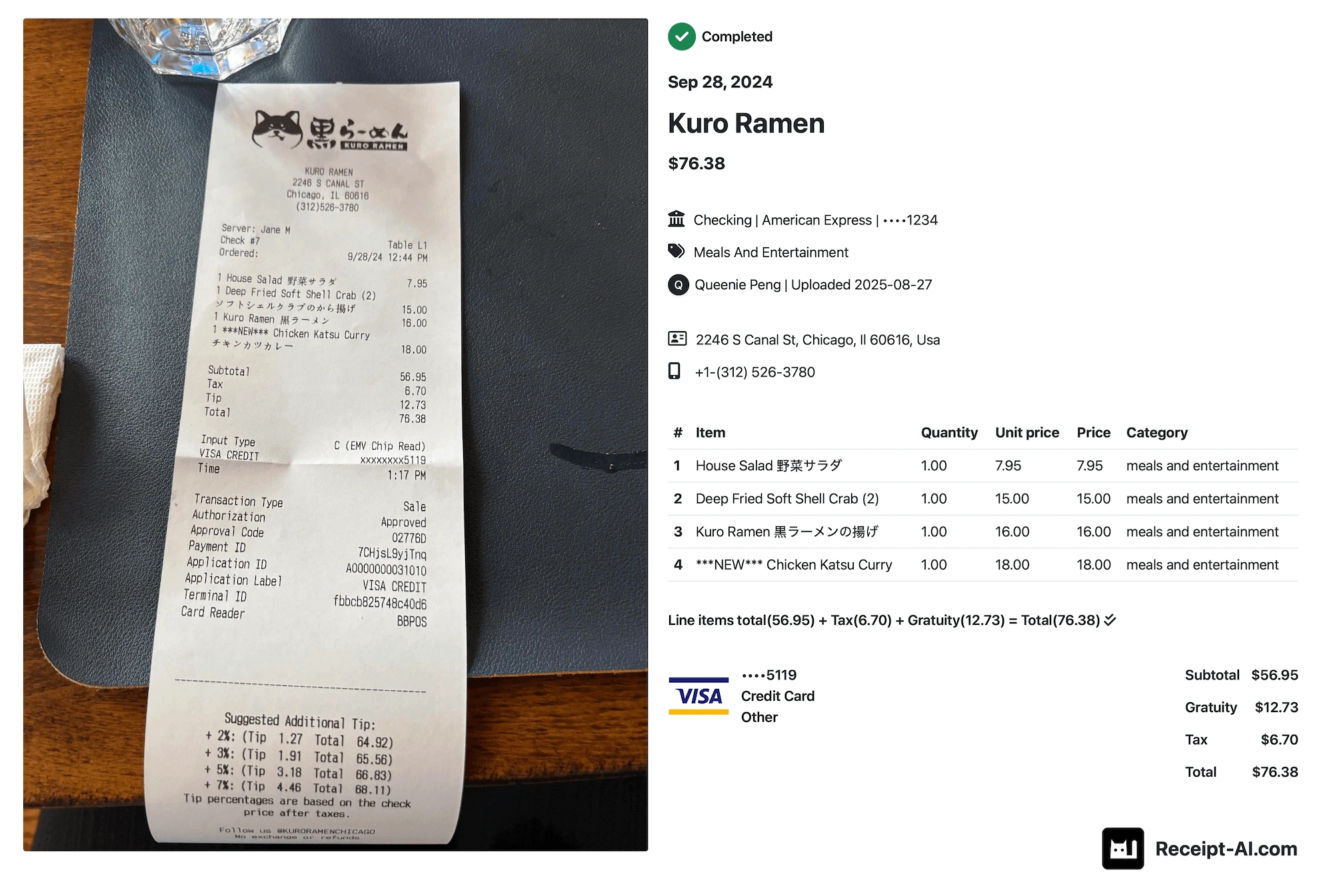
Many receipts contain more than a total amount.
They may include tax, tips, fees, and other details that can be difficult to track manually.
Receipt AI helps organize and extract those details so they are easier to review later.
Example:
* Food: $42.00
* Tax: $4.20
* Tip: $8.00
* Total: $54.20
Instead of leaving tip information buried inside a receipt image, Receipt AI helps make it easier to identify and organize.
Ready for Your Accountant
Need to share records with an accountant?
Receipt AI can export receipt data as a CSV file, including:
* vendor
* date
* total
* tax
* tip
* category
* folder
* notes
This makes it easier to review records, organize documentation, or share information with a tax professional.
Receipt AI cannot determine whether you qualify for a tax deduction.
But it can help you keep the records that make those conversations with your accountant much easier.
Good records start with the receipt.
Forward receipts by SMS and keep them organized in Receipt AI throughout the year, not just at tax time.
Learn more at Receipt-AI.com →
This article is for general educational purposes only and is not tax, legal, or accounting advice. Tax rules can change, and eligibility depends on individual facts and circumstances. Consult a qualified tax professional before making filing decisions.