Sunday, October 25, 2026
2026 IRS Guide: What Deductions Can I Claim Without Receipts?
Share this article:
For business expenses, receipts are generally required to support deductions claimed on your tax returns. However, there are circumstances and specific expenses for which the Internal Revenue Service (IRS) may allow deductions without a physical receipt. It is crucial to note that while you may not need a receipt, some form of documentation or substantiation is usually necessary. Here are a few examples where deductions might be claimed without a traditional receipt. This guide is general information, not tax advice. Talk to your tax professional about your own situation.

1. Standard Mileage Rate
Instead of keeping receipts for gas, repairs, and other car expenses, businesses can use the standard mileage rate to calculate deductions for business use of a vehicle.
The standard mileage rates for 2026 changed in the middle of the year. Use the rate for the date you drove:
- January 1 to June 30, 2026: Self-employed and business: 72.5 cents/mile; Charities: 14 cents/mile; Medical: 20.5 cents/mile; Moving (military only): 20.5 cents/mile
- July 1 to December 31, 2026: Self-employed and business: 76 cents/mile; Charities: 14 cents/mile; Medical: 23.5 cents/mile; Moving (military only): 23.5 cents/mile
For moving, the deduction is for certain active-duty members of the Armed Forces. Since 2026, it also covers certain members of the intelligence community.
Keep the two halves of the year separate in your mileage log. One rate does not cover the whole year.
Learn more from the IRS - "Standard mileage rates" https://www.irs.gov/tax-professionals/standard-mileage-rates, IRS News Release IR-2025-128 announcing the first-half 2026 rates https://www.irs.gov/newsroom/irs-sets-2026-business-standard-mileage-rate-at-725-cents-per-mile-up-25-cents, and IRS Announcement 2026-11 announcing the midyear increase https://www.irs.gov/irb/2026-29_irb.
What methods can I use to compute the deduction for my vehicle expenses?
You can generally figure the amount of your deductible car expense by using one of two methods:
- Standard mileage rate method.
- Actual expense method.
IRS Topic No. 510 explains business use of a car and the two methods. If you use the standard mileage rate, keep a contemporaneous mileage log (date, destination, business purpose, and miles). If you use actual expenses, keep records/receipts for costs such as gas, oil, repairs, tires, insurance, registration fees, licenses, and depreciation (or lease payments).
Learn more from the IRS - "Topic No. 510, Business use of car" https://www.irs.gov/taxtopics/tc510.
2. Meals and Entertainment (Business Meals)
The IRS states that the deduction for business meals is generally limited to 50% of the unreimbursed cost, and you must keep records that show the amount, date, place, business purpose, and business relationship of the person(s) entertained. A receipt is best practice; if one is missing, detailed contemporaneous records are essential.
Learn more from the IRS - "Topic No. 511, Business travel expenses" (includes meal rules) https://www.irs.gov/taxtopics/tc511 and "Publication 463, Travel, Gift, and Car Expenses" https://www.irs.gov/publications/p463.
3. Travel Expenses
For business travel, you must substantiate the amount, time, place, and business purpose of your travel. Receipts are generally required for lodging. For meals and incidental expenses, the IRS allows a standard meal allowance (per diem) instead of actual receipts, subject to applicable limitations.
Learn more from the IRS - "Understanding business travel deductions" https://www.irs.gov/newsroom/understanding-business-travel-deductions and "Publication 463, Travel, Gift, and Car Expenses" https://www.irs.gov/publications/p463.
Note: The most recent version of IRS Publication 463 (Travel, Gift, and Car Expenses) is the 2025 edition. As of October 2026, the IRS has not released a 2026 edition. The 2025 publication remains the latest official guidance and continues to apply unless a new version is issued.
4. What is the Standard Meal Allowance?
The IRS permits use of a standard meal allowance (meals & incidental expenses, or M&IE) for qualified business travel instead of deducting actual meal costs. The allowance is a set amount per day for the travel locality. You must still document the time, place, and business purpose of the travel.
Learn more from the IRS - "Publication 463, Travel, Gift, and Car Expenses" https://www.irs.gov/publications/p463.
5. Small Purchases Under $75
According to IRS Publication 463, receipts are not required for certain business expenses under $75, except for lodging. You must still keep records showing the date, amount, and business purpose of the expense. This exception typically applies to tolls, parking fees, and local transportation costs.
Learn more from the IRS - "Publication 463, Travel, Gift, and Car Expenses" https://www.irs.gov/publications/p463.
6. Business Supplies and Miscellaneous Expenses
Ordinary and necessary business expenses such as office supplies, software, and postage are deductible. If receipts are missing, you may use other documentation like invoices, canceled checks, or credit card statements as proof of purchase.
Learn more from the IRS - "Publication 535, Business Expenses" https://www.irs.gov/publications/p535.
Note: The IRS has discontinued Publication 535 (Business Expenses). The last revision was for 2022. The IRS now points readers to its business expense resources page instead, and the link above goes to that page.
7. Utilities and Communication Costs
The business-use portion of utilities, internet, and phone services may be deductible. You do not need receipts for each bill if you can show payment records and a reasonable basis for your business-use percentage. Keep statements or summaries showing consistent usage patterns.
Learn more from the IRS - "Publication 587, Business Use of Your Home" https://www.irs.gov/publications/p587.
8. Depreciation and Capital Expenses
Assets like computers, office furniture, or equipment can be deducted through depreciation or Section 179 expensing. You must keep records of the purchase price, date placed in service, and percentage of business use. Receipts are ideal, but invoices and digital purchase confirmations are acceptable substitutes.
One change to know for 2026: the One Big Beautiful Bill Act made the 100% additional first-year depreciation deduction permanent for qualified property acquired and placed in service after January 19, 2025. See Publication 463, chapter 4, for the details.
Learn more from the IRS - "Publication 946, How to Depreciate Property" https://www.irs.gov/publications/p946.
9. Home Office Deduction
If you use a portion of your home exclusively and regularly for business, you may qualify for the home office deduction. The IRS offers a simplified option that avoids detailed allocation of household bills. Under this method, you deduct a standard amount based on the square footage used for business.
For the simplified option, the standard deduction is $5 per square foot up to a maximum of 300 square feet. When using the simplified option, there is no depreciation deduction for the home portion and no later depreciation recapture for those years. Itemized deductions like mortgage interest and real estate taxes may still be claimed in full on Schedule A.
Learn more from the IRS - "Simplified option for home office deduction" https://www.irs.gov/businesses/small-businesses-self-employed/simplified-option-for-home-office-deduction, IRS FAQs on the simplified method https://www.irs.gov/businesses/small-businesses-self-employed/faqs-simplified-method-for-home-office-deduction, and "Topic No. 509, Business use of home" https://www.irs.gov/taxtopics/tc509.
10. Recordkeeping and Substantiation
The IRS requires all taxpayers to maintain records that clearly show income and expenses. Acceptable documentation may include bank statements, mileage logs, appointment calendars, and electronic receipts. While physical receipts are preferred, digital documentation is acceptable as long as it is accurate and accessible.
Learn more from the IRS - "Publication 583, Starting a Business and Keeping Records" https://www.irs.gov/publications/p583.
For more detailed information
See the IRS pages: "Standard mileage rates" https://www.irs.gov/tax-professionals/standard-mileage-rates, "Topic No. 510, Business use of car" https://www.irs.gov/taxtopics/tc510, "Topic No. 511, Business travel expenses" https://www.irs.gov/taxtopics/tc511, "Publication 535, Business Expenses" https://www.irs.gov/publications/p535, "Publication 587, Business Use of Your Home" https://www.irs.gov/publications/p587, "Publication 946, How to Depreciate Property" https://www.irs.gov/publications/p946, "Simplified option for home office deduction" https://www.irs.gov/businesses/small-businesses-self-employed/simplified-option-for-home-office-deduction, and "Publication 583, Starting a Business and Keeping Records" https://www.irs.gov/publications/p583.
Additional Details
- Name: Receipt AI
- Description: Receipt AI is an AI-powered software application for automated receipt data extraction and expense categorization.
tax deductions
IRS
receipts
contractors
home service trades
mileage
home office
business expenses
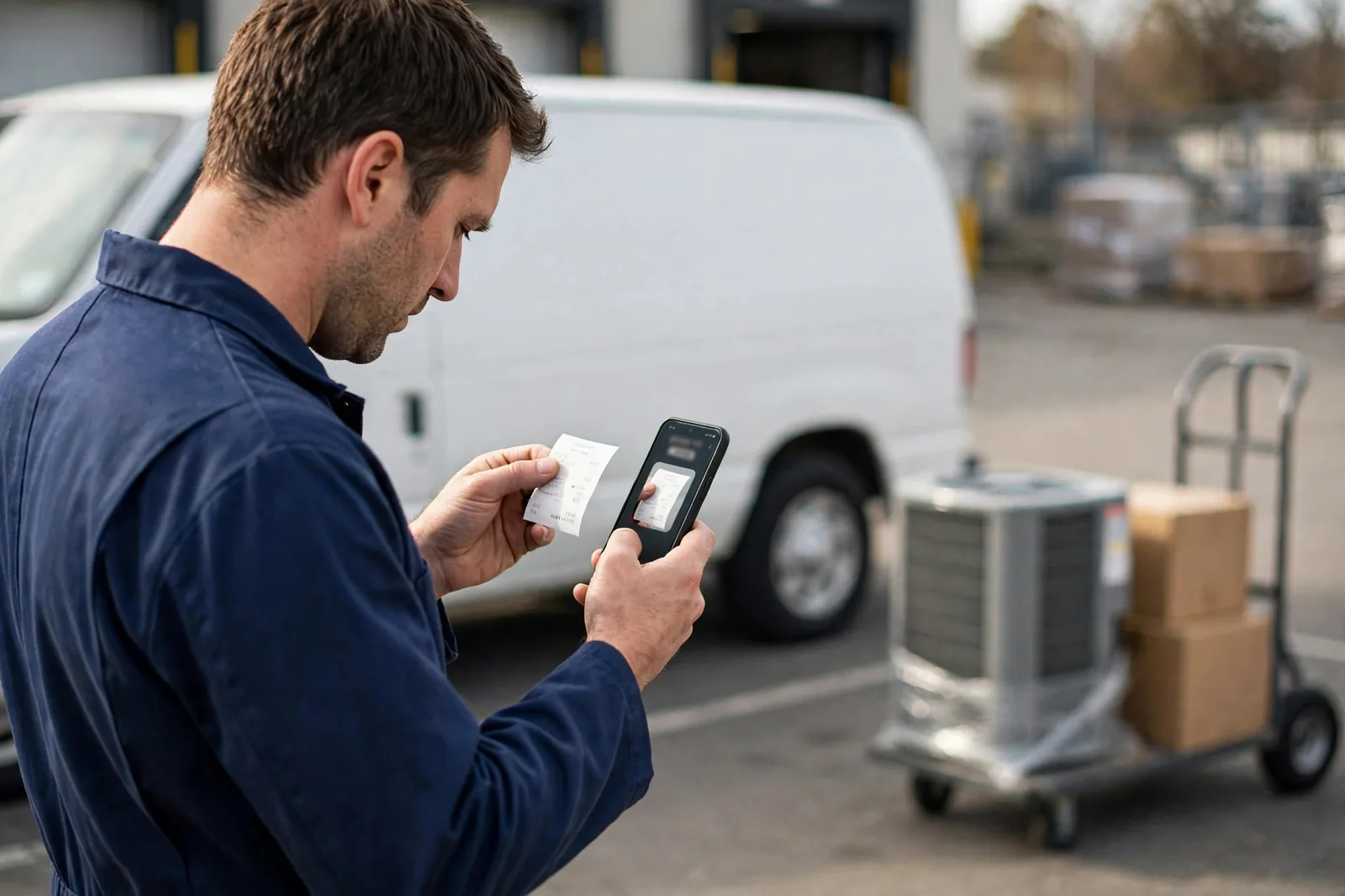

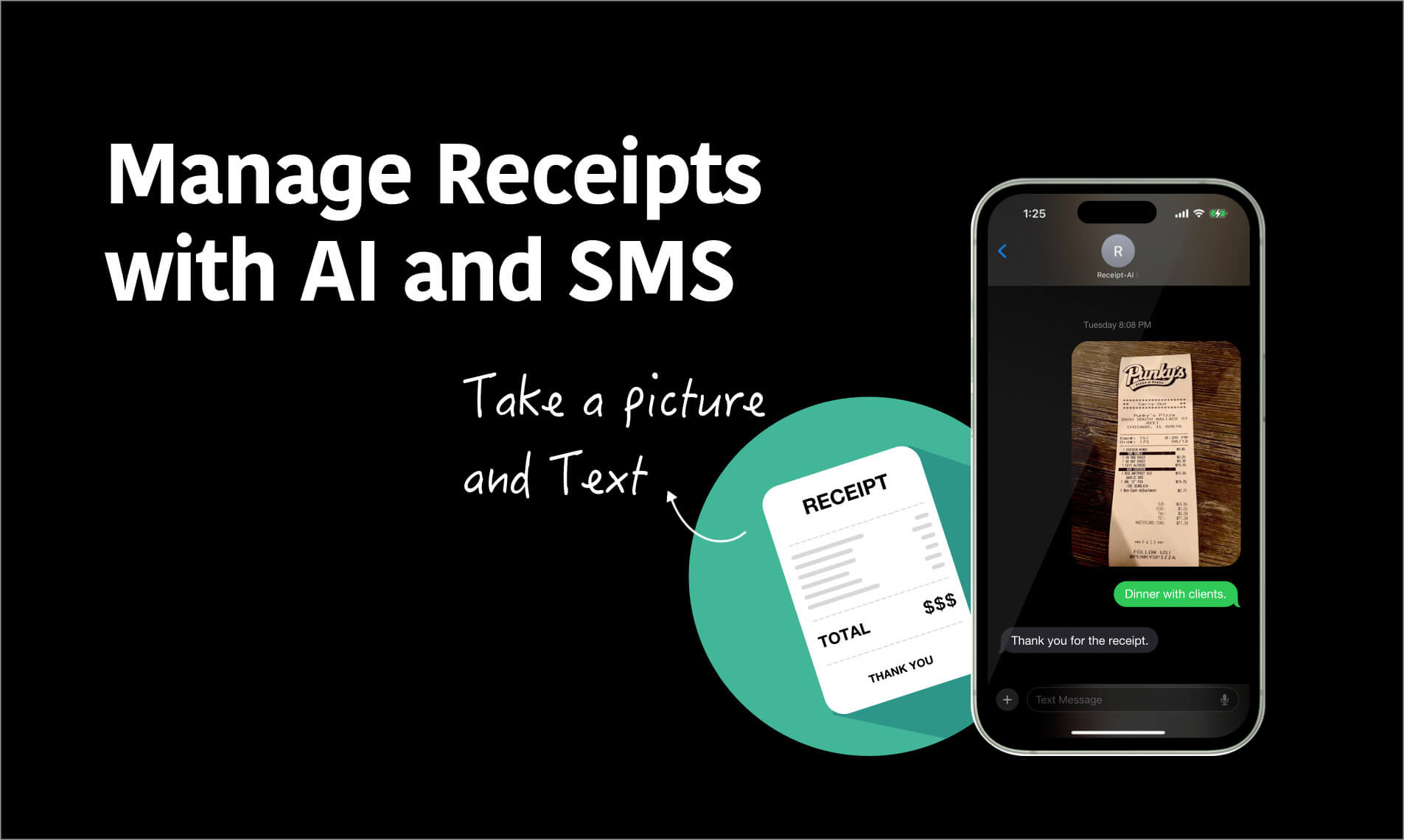


Start uploading Receipts using SMS.
Save 97% of your time with efficient receipt processing
Works with Xero and QuickBooks
Perfect for businesses, big and small
No extra app downloads. Works with tools you already have (SMS, Email and WhatsApp)